How one young man did not let a debilitating spinal cord injury extinguish his life’s passions.
by Cathy Cuff-Coffman

Ryan Danley grew up in Youngstown, Ohio, eventually settling in Columbus at age 12. After earning a degree in Science, Technology, and Society from Butler University, his early career path took a turn—one that pivoted from aspiring dentist to human resources professional.

Now working in HR at Honda, Danley’s professional focus lies in training and talent development. But outside the office, he’s just as passionate about music festivals and DJing, blending creativity with connection.

An Unexpected Turn in the Snow

In 2019, what began as a fun getaway to Canada with friends turned into the moment that would change Danley’s life. A trip to Veld Music Festival in Toronto eventually led to a reunion with new friends for a winter snowmobiling weekend. “It was supposed to be my last lap,” Danley recalls. Riding across a frozen lake, he mistook a snow-covered dock for a small hill. The collision sent him flying. He blacked out.

When he came to, he felt no pain—but also couldn’t move. “I went to stand up, and nothing happened,” he says. “What did I do?” he kept repeating, panic rising. Emergency responders couldn’t airlift him out due to snow and ice. Instead, they carried him by stretcher through the woods, snowmobiled him to an ambulance, and finally flew him to a hospital in Kingston, Ontario.

There, Danley underwent spinal decompression and fusion surgery, fusing his spine from C4 to T3. What began as a thrill ride on a snowmobile ended in a diagnosis: a spinal cord injury, C7 motor incomplete.

Rebuilding from Zero

The physical trauma was just the start. Back in the U.S., Danley entered intensive rehab at Ohio State’s Dodd Hall. Thanks to Honda’s generous healthcare, he had access to nearly unlimited therapy sessions—something he credits as a major reason for his continued progress. “I could probably make more money somewhere else,” he admits, “but I stay because of how they treated me.”

Daily life had to be reinvented. “I came home to the same place, but it wasn’t the same,” he explains. Everyday things—reaching for items, using the bathroom, climbing stairs—were now challenges to be solved.

From Creative Outlet to Career Pivot

In the midst of learning to live differently, Danley and his wife launched a creative business called Ohio Drip, specializing in ice-dyed clothing. It became a vibrant outlet, catching the attention of celebrities and musicians. “We even got Jacob Collier to wear one of our hoodies,” Danley shares. The vivid patterns reflected more than color—they represented resilience, reinvention, and community.

But as Danley’s body adjusted to his new reality, his marriage began to fray. “She said I was controlling because she had to take care of me,” Danley explains. The support he needed became a wedge, and the pandemic-era tension compounded the strain. Eventually, they divorced.

Forced Independence—and a New Strength

The split forced Danley to confront even greater levels of independence. He wasn’t yet able to shower alone, drive, or run errands. But he learned. “I had to figure it out,” he says. That included his first solo grocery trip: “I just said, I’ll make it work. If I need help, people will help.”

When his mother—his main caregiver after the divorce—was diagnosed with an aggressive cancer shortly after, Danley had no choice but to become entirely self-reliant. “It was very bittersweet,” he says, noting how their roles reversed. As his mom underwent chemotherapy, Danley became her support system. “We got closer this summer,” he adds.

A New Chapter with Heidi

Amid this hard-earned growth, Danley found unexpected joy. He met Heidi—also living with a spinal cord injury—at a Topgolf fundraiser. Encouraged by her to hit a golf ball again, he rediscovered a part of himself he thought he’d lost. That shared moment turned into something more. “We went for milkshakes and ended up talking until almost 1 a.m.,” he says.

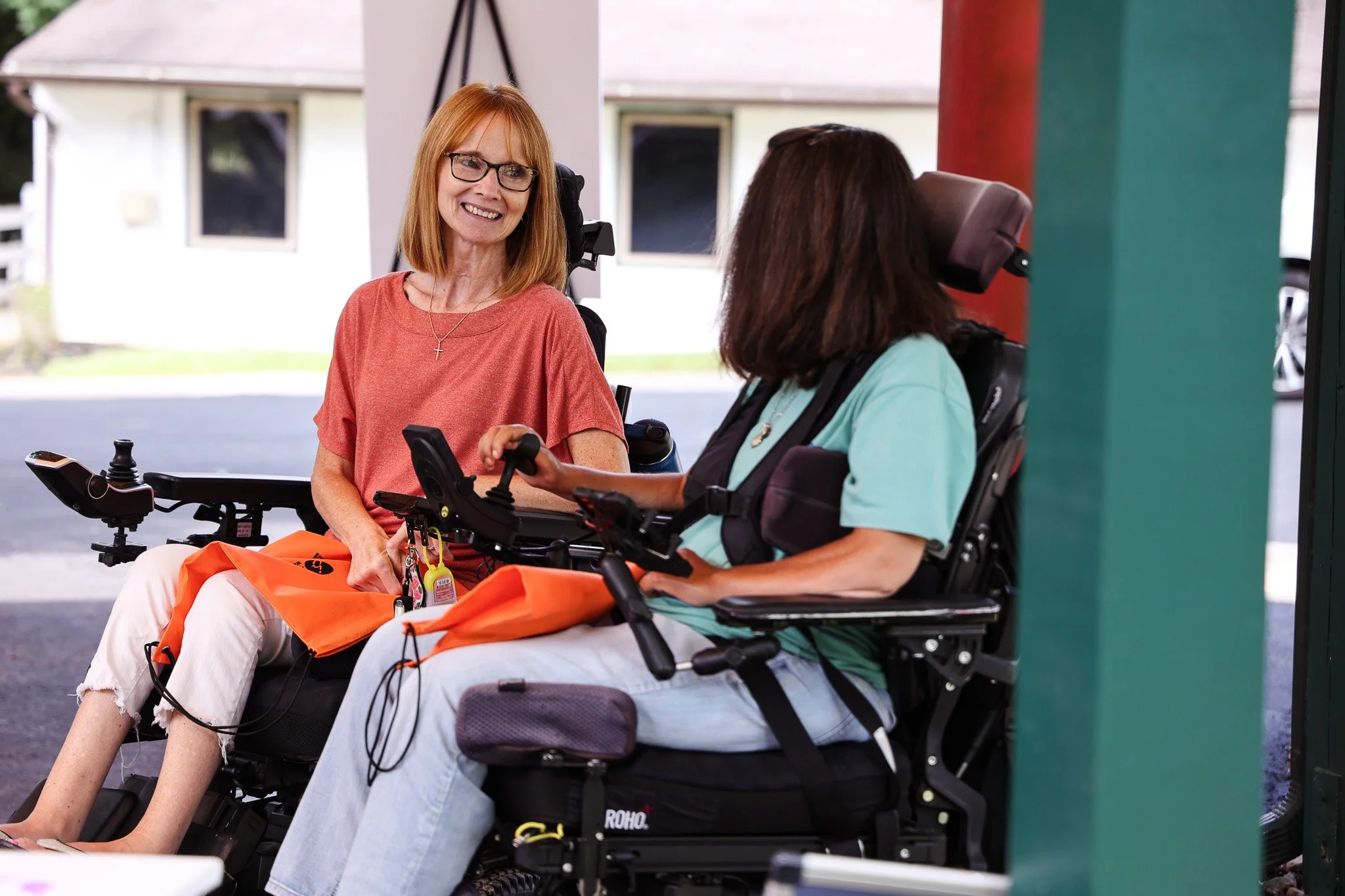
Their relationship is filled with empathy and understanding—two people navigating the world from wheelchairs, finding humor, connection, and resilience together. “Some days, even just hugging takes planning,” Danley laughs. But the emotional bond is effortless. “We just get each other,” he says.

Purpose and Perspective

Danley’s positivity wasn’t always this strong. At one point, pain and lack of sleep pushed him into depression. “I couldn’t even end it if I wanted to,” he admits. “I started saving my meds. I thought, once I collect enough, maybe that’s the way.”

But that moment sparked something else—a decision to give life one last full try. “I thought, if I’m going to check out, let me explore the hell out of life first.” He dove into books on philosophy, spirituality, and neuroscience—reading everything from the Bhagavad Gita to “Man’s Search for Meaning” by Viktor Frankl.

“I realized life is polar—you can’t know joy without knowing pain,” he says. “If I’m going through this much darkness, that must mean an equal amount of light exists. I just have to find it.”

Giving Back and Moving Forward

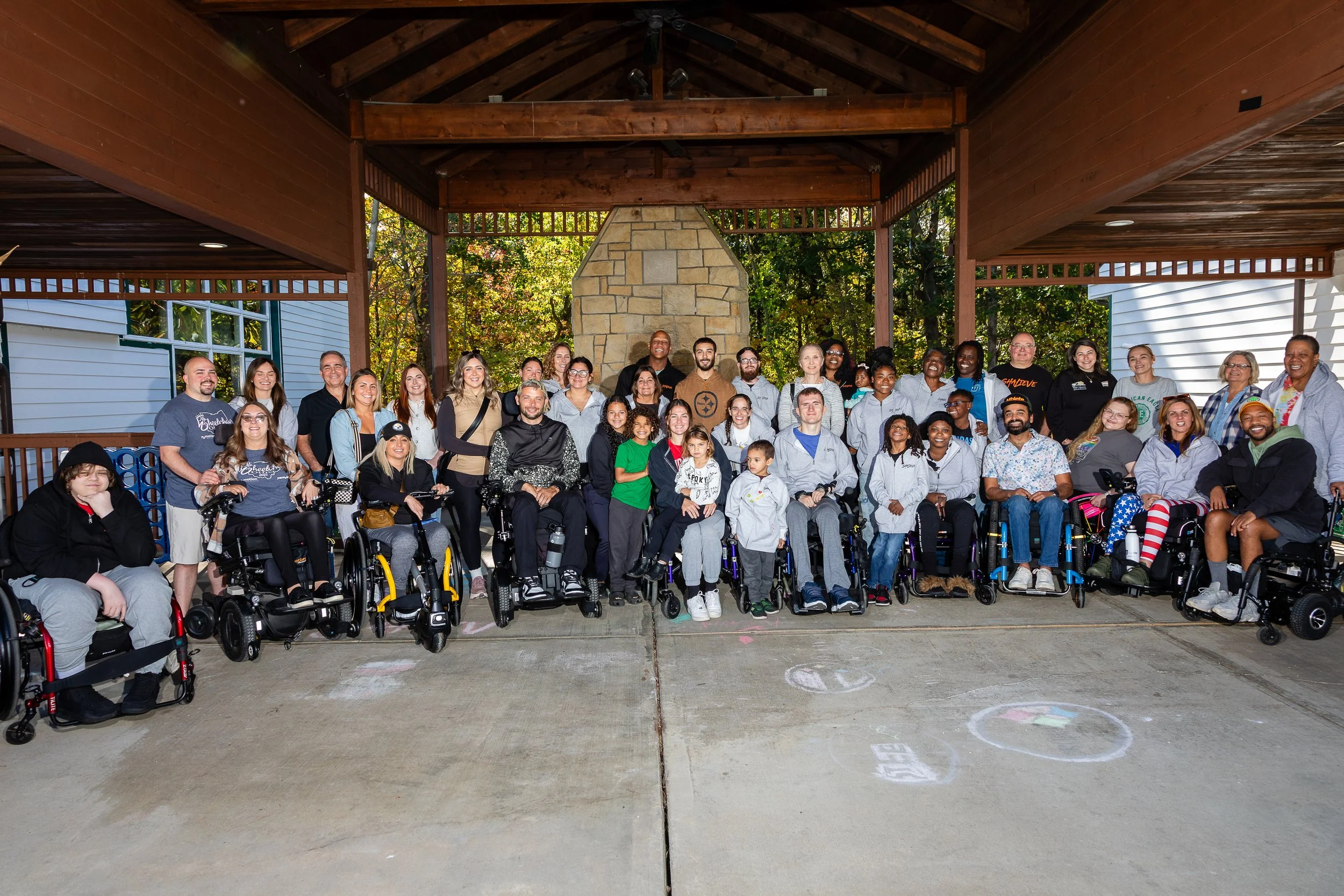
Today, Danley channels his lived experience into advocacy and community involvement. He works with Ohio State’s spinal cord injury research team, reviews grant proposals and participates in accessibility initiatives alongside Heidi.

“We’re like a dual lens,” he says—manual chair, power chair; male, female; different injuries, shared mission.

Danley’s story isn’t just about survival—it’s about adapting, innovating, and leading. Whether it’s rearranging furniture to feel closer to a partner or hitting golf balls again for the first time, he keeps choosing action over fear.

“I don’t let life beat me,” he says. “I just find another way.”